
BUCK'S ISLAND · SALES & FINANCING
Understanding Boat Retail Financing:
What Banks Look For — and What You Should Know
Buying a boat is one of life's great purchases. Understanding how lenders evaluate your application can mean the difference between a great rate and a frustrating one.
Whether you're eyeing a new bass boat, a pontoon for the family, or a pre-owned fishing boat for tournament season, chances are you're thinking about financing. Retail boat financing works differently than a car loan — the amounts are often larger, the terms longer, and lenders look at a wider picture of your financial health before saying yes. Here's what you need to know before you apply.
What Banks and Lenders Look For
Marine lenders evaluate several key factors when reviewing a retail financing application. Understanding each one helps you go in prepared — and puts you in the best position for the most competitive rates.
Credit Score
Your single biggest rate driver. Most lenders want 680+; the best rates go to 720+ borrowers, lenders will consider credit scores as low as 580.
Debt-to-Income Ratio (DTI)
Monthly obligations vs. gross income. Lenders generally prefer a DTI under 40–45%.
Income & Employment
Stable, verifiable income gives lenders confidence. Self-employed buyers may need 2 years of tax returns.
Down Payment
Typical marine loans require 10–20% down. More down = lower risk = better rate.
Loan-to-Value (LTV)
The loan amount relative to the boat's appraised value. A lower LTV signals lower risk to the lender.
Length of Credit History
Longer, consistent payment history builds lender trust — especially for large-ticket purchases.
Credit Score & Rate Tiers
Marine lenders use tiered pricing, meaning your rate moves in bands based on your credit score bracket. Here's a general illustration of how those tiers tend to look in today's market:
Credit Score
Tier Rate Outlook
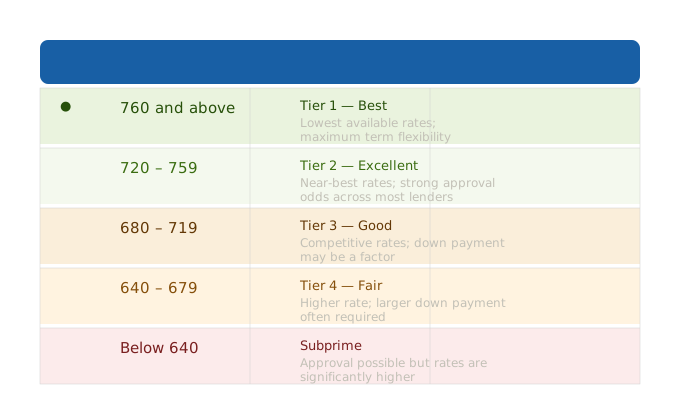
Even a 40-point difference in your credit score can shift your rate meaningfully over a 15-year loan term — potentially costing or saving thousands of dollars. Knowing your tier before you shop gives you real leverage.
Why Boat Loans Are Different from Auto Loans
Boats are considered a recreational or luxury asset by most lenders, which changes how they're evaluated. Unlike a car — which most people need to live and work — a boat is optional. That perception of risk means lenders are more conservative. Loan terms can stretch from 10 to 20 years on larger purchases, but interest rates typically run higher than a comparable auto loan. Lenders also pay closer attention to the boat's age, condition, and market value, since repossession and resale is more complex than a vehicle.
What Customers Should Consider Before Financing
Before you sign an application, honestly evaluate these factors — they'll shape both your approval odds and the total cost of your loan.
• Know your credit score before applying. Pull a free report at AnnualCreditReport.com and dispute any errors. Hard inquiries temporarily lower your score, so don't apply to multiple lenders at once — let Buck's Island work with multiple lenders on your behalf through a single application.
• Set a realistic total budget, not just a monthly payment. A comfortable payment can hide a very long — and expensive — loan. Run the numbers on total interest paid, not just what you'll owe each month.
• Save for a meaningful down payment. Ten percent is the floor; 20% is where you get meaningfully better terms. A stronger down payment also protects you from being "upside down" if values fluctuate.
• Account for the full cost of ownership. Insurance, registration, fuel, maintenance, storage, and trailer costs add up quickly. Make sure your monthly budget has room for all of it, not just the loan.
• Understand variable vs. fixed rates. Most retail boat loans are fixed, which is generally the safer choice for long terms. Make sure you know exactly what you're signing.
• Ask about prepayment penalties. Some lenders charge fees for paying off early. If you plan to pay down the loan aggressively, confirm there are no penalties before you commit.
• Don't stretch the term just to lower the payment. A 20-year loan on a depreciating asset is a long commitment. Shorter terms — even with a slightly higher payment — usually make more financial sense in the long run.
How Buck's Island Can Help
We've been helping families get on the water since 1948. Our finance team works with a network of trusted marine lenders to find competitive rates across multiple institutions with a single credit application, minimizing the impact on your score.
Whether you're a first-time buyer or a seasoned boater upgrading to your next build, we'll walk you through every step of the process transparently. The goal is simple: get you out on the water in the right boat, at a payment that works for your life.
Ready to see what you qualify for? Start your credit application here — it only takes a few minutes.
Questions? Call us at 1-800-467-3239 or email bimarina@bucksisland.com